




 German
 Recent advances in brain research have made it possible to develop the SAS method that is currently being researched, developed, and implemented by SAS Centers and SAS Providers in England, Ireland, Holland, Germany, Poland, Turkey, and Cyprus.
SAS programs use music, speech, and tones delivered through headphones as a tool to reach and activate the two hemispheres of the brain. Since sounds from the right ear go to the left side of the brain, and sounds from the left ear go to the right side of the brain, it is possible to activate the brain in a coordinated manner.
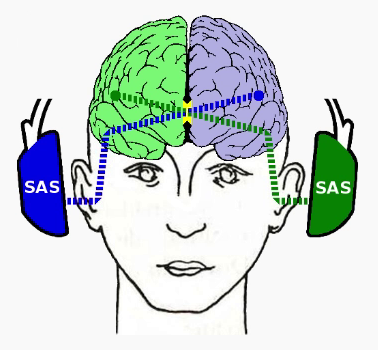
SAS has developed a series of unique intervention programs utilizing various techniques such as the movement of sound, timing and phase variations, specific tone differences, and ear-specific programs. SAS’s proprietary Constrained Induced Language Therapy (CILT) aims to encourage speech, improve pronunciation, and reduce the effects of Dyslexia. Specially written therapeutic stories are also used to build confidence and self-worth.
SAS programs are specifically tailored to individual client needs by utilizing different levels of activation intensity, a range of breathing and brainwave frequencies, and structured sequences that introduce different elements in a controlled manner.
The process for clients is simple and completely safe. By listening to specially processed sounds through headphones each day, the brain will receive a healthy processing workout. By doing this for a few weeks, the brain establishes a new and permanent habit for processing more quickly and effectively. Many learning difficulties such as problems with attention and concentration, reading, writing and speech, and behaviour are related to how well we use our two brain halves and their specific processing centres. The reason this new method is so exciting is that it is able to help children and adults facing a wide range of challenges improve their performance in daily life.
A typical SAS Neuro-Sensory Activation program is designed to:
- Activate the auditory processing centres in the brain to develop the ability to recognise, filter and process sound and speech input, leading to less sensory overload, faster comprehension, better verbal expression and improved reading and writing.
- Activate other sensory processing centres in the brain (vision, touch, smell and taste) to reduce sensory overload and improve overall functioning.
- Activate the balance (vestibular) system to improve balance, proprioception, fine and gross motor skills and visual tracking.
- Promote right ear dominance to improve speech recognition, faster comprehension and better verbal expression.
- Promote integration between hemispheres to speed up processing in the brain, leading to better comprehension and improved emotional wellbeing.
- Alter breathing rhythms to calm or energise the client and alter brainwave patterns that may underlie attention deficit, hyperactivity and speech difficulties.
- Alter belief systems to build self-worth, confidence and motivation.
This section provides summaries of Scientific Articles Published in Q1-Q4 Category Journals Related to Music-Brain-Development-Neuroplasticity Relationships, the Effects of Music on Cognitive-Sensory-Motor-Emotional-Psychosocial Functions, and the Scientific Foundation of Music-Based Acoustic Neuro-Sensory Activation Methods Used in SAS Programs.
Efficacy of binaural auditory beats in cognition, anxiety, and pain perception: a meta-analysis
Garcia-Argibay M, Santed MA, Reales JM. Efficacy of binaural auditory beats in cognition, anxiety, and pain perception: a meta-analysis. Psychol Res. 2019 Mar;83(2):357-372. https://doi.org/10.1007/s00426-018-1066-8
Binaural auditory beats are a perceptual phenomenon resulting from the presentation of two tones, whose frequencies differ slightly, to each ear separately. It has been suggested that binaural beats may affect cognition and mental states. The aim of this meta-analysis was to examine the effects of binaural beats on memory, attention, anxiety, and analgesia. Twenty-two studies met our inclusion criteria for this meta-analysis. Read More
……..
The Effect of Binaural Beats on Visuospatial Working Memory and Cortical Connectivity
Beauchene C, Abaid N, Moran R, Diana RA, Leonessa A (2016) The Effect of Binaural Beats on Visuospatial Working Memory and Cortical Connectivity. PLoS ONE 11(11): e0166630. https://doi.org/10.1371/journal.pone.0166630
Binaural beats utilize a phenomenon that occurs in the cortex when two different frequencies are presented separately to each ear. This procedure produces a third phantom binaural beat with a frequency equal to the difference of the two tones presented, which can be manipulated for non-invasive brain stimulation. Read More
……..
Binaural beats to entrain the brain? A systematic review of the effects of binaural beat stimulation on brain oscillatory activity, and the implications for psychological research and intervention
Ingendoh RM, Posny ES, Heine A. Binaural beats to entrain the brain? A systematic review of the effects of binaural beat stimulation on brain oscillatory activity, and the implications for psychological research and intervention. PLoS One. 2023 May 19;18(5):e0286023. https://doi.org/10.1371/journal.pone.0286023
Binaural beats are an auditory phenomenon created when two tones of different frequencies are presented separately to each ear, inducing the sensation of a third tone that oscillates at a frequency equal to the difference of the two tones. Binaural beats can be perceived in the frequency range of approximately 1–30 Hz, which overlaps with the main human EEG frequency bands. The brainwave entrainment hypothesis, which assumes that external stimulation at a specific frequency leads to the brain’s electrocortical activity oscillating at the same frequency, forms the basis of research on the effects of binaural beat stimulation on cognitive and emotional states. Read More
……..
Stress management using fNIRS and binaural beats stimulation
Al-Shargie F, Katmah R, Tariq U, Babiloni F, Al-Mughairbi F, Al-Nashash H. Stress management using fNIRS and binaural beats stimulation. Biomed Opt Express. 2022 May 24;13(6):3552-3575. https://pmc.ncbi.nlm.nih.gov/articles/PMC9208616/
In this study, we explore the effectiveness of binaural beat stimulation (BB) in enhancing cognitive alertness and reducing mental stress levels in the workplace. We developed an experimental protocol under four cognitive conditions: “High Alertness, Enhanced Alertness, Mental Stress, and Stress Reduction.” Read More
……..
Binaural auditory beats and music of choice as audio distraction behaviour guidance technique among children: A randomized controlled trial
Bhusari BN, Hugar SM, Gokhale N, Kajjari S, Karmarkar S, Sahai V. Binaural auditory beats vs music of choice as audio distraction behaviour guidance technique among children: A randomized controlled trial. J Oral Biol Craniofac Res. 2025 Jan-Feb;15(1):163-169. doi: 10.1016/j.jobcr.2024.12.019
Binaural beat is generated by the dichotic presentation of two pure tone sine waves of different frequencies. In dental settings, children listening to familiar music during treatments create a comfortable, familiar environment by controlling the anxiety caused by instruments like the airotor or syringe. Read More
……..
Neural consequences of binaural beat stimulation on auditory sentence comprehension: an EEG study
Jeahong Kim, Hyun-Woong Kim, Jessica Kovar, Yune Sang Lee, Neural consequences of binaural beat stimulation on auditory sentence comprehension: an EEG study, Cerebral Cortex, Volume 34, Issue 1, January 2024, bhad459, https://etiadpajohi.ir/article-1-1341-en.html
When two sound signals of different frequencies are presented separately to the left and right ears, the brain perceived a sound signal with a frequency equal to the frequency difference between the two sounds. This phenomenon was given the name binaural beat. If this technology is used regularly and listened to purposefully, it can reduce stress and anxiety, and increase focus, concentration, motivation, confidence, and depth in meditation. Read More
……..
Beta and gamma binaural beats enhance auditory sentence comprehension
Kim, HW., Happe, J. & Lee, Y.S. Beta and gamma binaural beats enhance auditory sentence comprehension. Psychological Research 87, 2218–2227 (2023). https://doi.org/10.1007/s00426-023-01808-w
Binaural beats (an auditory illusion created by the dichotic presentation of two pure tones of slightly different frequencies) have been shown to modulate various cognitive and psychological states. Here, we investigated the effects of binaural beat stimulation on auditory sentence processing requiring judgments of syntactic relationships (Experiment 1) or evaluation of syntactic well-formedness (Experiment 2) in a large cohort of healthy young adults ( N = 200). Read More
……..
Effects of Binaural Beat Stimulation in Adults with Stuttering
Chernetchenko D, Prasolov P, Aganov S, Voropai A, Polishchuk Y, Lituiev D, Nayshtetik E. Effects of Binaural Beat Stimulation in Adults with Stuttering. Brain Sciences. 2023; 13(2):309. https://doi.org/10.3390/brainsci13020309
In recent years, several studies have demonstrated a link between stuttering and abnormal electroencephalographic (EEG) β-power in the cortex. The effects of exposure to binaural stimuli were examined using EEG, ECG (to monitor heart rate variability as a measure of stress), and speech analysis in 6 adults with stuttering and a control group of 6 normally fluent participants. Read More
……..
Neural oscillations and brain stimulation in Alzheimer’s disease
Jafari Z, Kolb BE, Mohajerani MH. Neural oscillations and brain stimulation in Alzheimer’s disease. Prog Neurobiol. 2020 Nov;194:101878. https://doi.org/10.1016/j.pneurobio.2020.101878
Aging is associated with changes in cognitive processing and brain neurophysiology. While the primary symptom of amnestic mild cognitive impairment (aMCI) is memory problems greater than normal for age and education, patients with Alzheimer’s disease (AD) exhibit deficits in other cognitive domains in addition to memory impairment. Read More
……..
Innovative Approach in Non-Invasive Neuromodulation Methods: Structured Music-Based Sensory Activation Solutions (SAS)
Kırış, Onur. (2024). Innovative Approach in Non-Invasive Neuromodulation Methods: Structured Music-Based Sensory Activation Solutions (SAS)
Non-invasive neuromodulation methods play a significant role in the treatment of neurological and psychiatric disorders by regulating the functions of the nervous system. The Sensory Activation Solutions (SAS) method aims to achieve similar effects to these methods through the use of music in a structured form. The SAS method aims to synchronize brain waves and promote neuroplasticity by using specific frequencies, rhythms, and melodic features of music. Read More
……..
General Overview of the Effects of Music Listening Containing Binaural Beats on Well-being
Kırış, Onur. (2024). General Overview of the Effects of Music Listening Containing Binaural Beats on Well-being. Journal of Happiness and Well-being. 10. 65-76. https://doi.org/10.32339/usmut.2024.10.17.114
Well-being is generally associated with an individual’s emotional, social, and psychological healthy functioning. Some studies on binaural beats, known as an auditory phenomenon created by presenting two different frequencies differently to each ear, suggest that sounds at specific frequencies can affect brain waves, leading to positive psychological effects. The effects of binaural beats sound tones are primarily related to their impact on neuronal activity in the auditory cortex. Research shows that binaural beats sound waves cause significant changes in brain waves. In particular, observed changes in the frequency and amplitude of brain waves such as alpha, beta, theta, and delta provide clues to explain the effects of this phenomenon on mental and psychological processes. Listening to music containing binaural beats has been observed to have positive effects on reducing stress and anxiety, increasing attention and concentration ability, and improving sleep quality. These findings suggest that binaural beats can have a significant impact on individuals’ well-being and quality of life. Read More
……..
Influence of monaural auditory stimulation combined with music on brain activity
Chang M, Tanaka K, Naruse Y, Imamura Y, Fujii S. Influence of monaural auditory stimulation combined with music on brain activity. Front Hum Neurosci. 2024 Jan 11;17:1311602. https://doi.org/10.3389/fnhum.2023.1311602
Recently, increasing interest in mental states and psychophysical well-being has fueled research into methods that can aid relaxation and recovery. While traditional methods such as meditation and sauna are effective, they have limitations; therefore, there is a need for more accessible and convenient alternatives. Read More
……..
Intracranial electroencephalography power and phase synchronization changes during monaural and binaural beat stimulation
Becher AK, Höhne M, Axmacher N, Chaieb L, Elger CE, Fell J. Intracranial electroencephalography power and phase synchronization changes during monaural and binaural beat stimulation. Eur J Neurosci. 2015 Jan;41(2):254-63. https://doi.org/10.1111/ejn.12760
Auditory stimulation with monaural or binaural beats (i.e., sine waves of close frequencies presented to both ears or to each ear separately, respectively) represents a non-invasive approach to influence electrical brain activity. Read More
……..
The Impact of Monaural Beat Stimulation on Anxiety and Cognition
Chaieb L, Wilpert EC, Hoppe C, Axmacher N, Fell J. The Impact of Monaural Beat Stimulation on Anxiety and Cognition. Front Hum Neurosci. 2017 May 15;11:251. https://doi.org/10.3389/fnhum.2017.00251
Auditory beat stimulation is anticipated to provide a promising new tool for alleviating anxiety symptoms and improving cognition. Read More
……..
Auditory priming improves neural synchronization in auditory-motor entrainment
Crasta JE, Thaut MH, Anderson CW, Davies PL, Gavin WJ. Auditory priming improves neural synchronization in auditory-motor entrainment. Neuropsychologia. 2018 Aug;117:102-112. https://doi.org/10.1016/j.neuropsychologia.2018.05.017
Neurophysiological research has shown that the auditory and motor systems interact with rhythmic auditory stimuli through a process called entrainment. Read More
……..
Can Binaural Beat Music Be Useful as a Method to Reduce Dental Patients’ Anxiety?
Salehabadi N, Pakravan A, Rasti R, Pourasghar M, Mousavi SJ, Saravi ME. Can Binaural Beat Music Be Useful as a Method to Reduce Dental Patients’ Anxiety? Int Dent J. 2024 Jun;74(3):553-558. https://doi.org/10.1016/j.identj.2023.11.009
One of the major problems in dentistry and obstacles to providing dental treatment is anxiety. Music use is one of the non-medical ways to reduce anxiety. Read More
……..
Rhythmic musical activities may strengthen connectivity between brain networks associated with aging-related deficits in timing and executive functions
Colverson A, Barsoum S, Cohen R, Williamson J. Rhythmic musical activities may strengthen connectivity between brain networks associated with aging-related deficits in timing and executive functions. Exp Gerontol. 2024 Feb;186:112354. https://doi.org/10.1016/j.exger.2023.112354
Brain aging and its common accompanying conditions (e.g., hypertension) affect brain networks critical for organizing information, processing speed, and action programming (i.e., executive functions). Declines in these networks can impact timing and have a detrimental effect on the ability to perceive and perform musical rhythms. Read More
……..
Effects of Binaural Beat Stimulation in Adults with Stuttering
Chernetchenko D, Prasolov P, Aganov S, Voropai A, Polishchuk Y, Lituiev D, Nayshtetik E. Effects of Binaural Beat Stimulation in Adults with Stuttering. Brain Sci. 2023 Feb 11;13(2):309 https://doi.org/10.3390/brainsci13020309
In recent years, several studies have demonstrated a link between stuttering and abnormal electroencephalographic (EEG) β-power in the cortex. The effects of exposure to binaural stimuli were examined using EEG, ECG, and speech analysis in adults with stuttering (n = 6) and fluent participants (n = 6). Read More
……..
Entrapment of Binaural Auditory Beats in Subjects with Symptoms of Insomnia
Lee E, Bang Y, Yoon IY, Choi HY. Entrapment of Binaural Auditory Beats in Subjects with Symptoms of Insomnia. Brain Sci. 2022 Mar 2;12(3):339. https://doi.org/10.3390/brainsci12030339
Binaural auditory beat stimulation (BB) delivered bilaterally, with two different frequencies for each ear, has been reported to be effective in reducing anxiety and controlling mood. This study aimed to evaluate the brainwave entrainment effect of binaural beats and propose it as an effective and safe complementary therapy for alleviating insomnia symptoms. Read More
……..
Neural plasticity: The substratum of music-based interventions in neurorehabilitation
Chatterjee D, Hegde S, Thaut M. Neural plasticity: The substratum of music-based interventions in neurorehabilitation. NeuroRehabilitation. 2021;48(2):155-166. https://doi.org/10.3233/nre-208011
The role of music in mediating structural and connectivity changes in the malleable brain has been well-documented and stands out as a significant area of research. With more advanced imaging techniques, definitive outcomes of the music-brain relationship are beginning to crystallize scientifically. It is also known that music-based interventions possess significant power not only at the neuronal level but also at the motivational level, fostering positive emotions. Read More
……..
Cognitive Crescendo: How Music Shapes the Brain’s Structure and Function?
Toader C, Tataru CP, Florian I-A, Covache-Busuioc R-A, Brat u B-G, Glavan LA, Bordeianu A, Dumitrascu D-I, Ciurea AV. Cognitive Crescendo: How Music Shapes the Brain’s Structure and Function. Brain Sciences. 2023; 13(10):1390. https://doi.org/10.3390/brainsci13101390
Music is a complex phenomenon involving multiple brain areas and neural connections. Centuries ago, it was discovered that music is an effective method for enriching psychological states and even treating many pathologies. Modern research investigations, using neuroimaging, particularly magnetic resonance imaging, offer a new avenue for understanding music perception and the underlying neurological mechanisms. Read More
……..
The transformative power of music: Insights into neuroplasticity, health, and disease
T Zaatar M, Alhakim K, Enayeh M, Tamer R. The transformative power of music: Insights into neuroplasticity, health, and disease. Brain Behav Immun Health. 2023 Dec 12;35:100716. doi: 10.1016/j.bbih.2023.100716. https://doi.org/10.1016/j.bbih.2023.100716
Music is a universal language that can evoke profound emotional and cognitive responses. In this literature review, we explore the complex relationship between music and the brain, from how music is decoded by the nervous system to its therapeutic potential in various disorders. Music activates a network of multiple brain regions and circuits, including sensory-motor processing, cognitive, memory, and emotional components. Brain network oscillations induced by music occur in specific frequency bands, and listening to music that an individual prefers may provide easier access to these brain functions. Read More
……..
Music in the brain
Vuust, P., Heggli, O.A., Friston, K.J. et al. Music in the brain. Nat Rev Neurosci 23, 287–305 (2022). https://doi.org/10.1038/s41583-022-00578-5
Music is ubiquitous across human cultures as a source of emotional and pleasurable experience that moves us both physically and emotionally, and learning to play music shapes both brain structure and brain function. Music processing in the brain, namely the perception of melody, harmony, and rhythm, has traditionally been studied as an auditory phenomenon using passive listening paradigms. Read More
……..
Short-Term Effect of Auditory Stimulation on Neural Activities: A Scoping Review of Longitudinal Electroencephalography and Magnetoencephalography Studies
(Kobayashi K, Shiba Y, Honda S, Nakajima S, Fujii S, Mimura M, Noda Y. Short-Term Effect of Auditory Stimulation on Neural Activities: A Scoping Review of Longitudinal Electroencephalography and Magnetoencephalography Studies. Brain Sci. 2024 Jan 26;14(2):131. https://doi.org/10.3390/brainsci14020131.
Techniques such as electroencephalography (EEG) and magnetoencephalography (MEG) are powerful tools for measuring dynamic brain oscillations that align with dynamic regularities in auditory stimuli. EEG/MEG function as a suitable research tool to reveal various neural activities associated with auditory stimuli, including event-related potentials, brain oscillations, and functional connectivity. The accumulated evidence in this field comes from studies investigating neuroplasticity induced by prolonged auditory training, particularly from cross-sectional studies comparing musicians and non-musicians, and longitudinal studies on musicians. Read More
The SAS methodology is described in detail.
Discovering an intervention method that works is one thing, but explaining why and how it works is entirely different. A famous example of this is Aspirin, one of the most widely used drugs in the world. For ancient times, it has been known that certain plant extracts can help to reduce headaches, aches, or fevers. Hippocrates (c. 400 BC), the father of modern medicine, explained how willow tree bark and leaves could be used to make a powder with these properties. It was not until the mid-1800s that this natural Aspirin began to be produced in laboratories, and by the early 1900s Aspirin was a household name in medicine. It was not until the 1960s that the underlying mechanisms behind Aspirin’s effect were investigated, and even today, they continue to be further researched.
In this paper, knowing full well that this is an ongoing study, I shall summarise the scientific foundations underlying the SAS neuro-sensory activation method. More research is needed on the efficacy and effectiveness of basic neuroscience and methodology, which is actively being conducted by SAS in conjunction with a number of educational and academic research institutions. Unlike Aspirin fifty years ago, we have observed the method’s efficacy and are now researching the underlying mechanisms of the intervention technique. Nonetheless, the assumptions underlying the method are based on sound scientific knowledge and currently accepted research, as outlined below.
Can the brain change?
The proposed SAS method would only be valuable if the brain can change in response to external stimuli via the senses. Until the late 20th century, this was thought to be impossible, but more recent research on brain plasticity points to the brain’s extraordinary capacity for change:
The brain, as the source of human behaviour, is shaped by environmental changes and pressures, physiological changes, and experiences by its very design. This is the mechanism for learning, growth and development—changes in the input to any nervous system, or in the demands upon its afferent connections, lead to a reorganisation of the system that can be demonstrated at the level of behaviour, anatomy and physiology, and down to the cellular and molecular levels.
Plasticity, therefore, is not an occasional occurrence of the nervous system; rather, it is the normal condition of the nervous system throughout life. Any full and coherent account of a sensory or cognitive theory must frame the fact that the nervous system, and the brain in particular, undergoes continuous change in response to changes in input transmitters and output targets. Implicit in the widely accepted concept of plasticity is the idea that there is a definable starting point, followed by change that can be recorded and measured. In fact, there is no such starting point, because any event falls into a moving target, namely a brain that is continuously changing, driven by prior events or originating from intrinsic remodeling activity. We should, therefore, not think of the brain as a static object that can be mobilized to enact a series of changes called plasticity, nor as an ordered sequence of events driven by plasticity. Instead, we should think of the nervous system as a constantly changing structure, of which plasticity is an integral feature and a mandatory consequence of every sensory input, motor action, association, reward signal, action plan or awareness. Within this framework, concepts such as psychological processes or dysfunctions, as opposed to organically based functions, cease to be informative. Just as changes in brain circuits will result in behavioural changes, so behaviour will result in changes in brain circuits. (Pascual-Leone et al, 2005) [1] Instead, we should think of the nervous system as a constantly changing structure, of which plasticity is an integral feature and a mandatory consequence of every sensory input, motor action, association, reward signal, action plan or awareness. Within this framework, concepts such as psychological processes or dysfunctions, as opposed to organically based functions, cease to be informative. Just as changes in brain circuits will result in behavioural changes, so behaviour will result in changes in brain circuits. (Pascual-Leone et al, 2005) [1] Instead, we should think of the nervous system as a constantly changing structure, of which plasticity is an integral feature and a mandatory consequence of every sensory input, motor action, association, reward signal, action plan or awareness. Within this framework, concepts such as psychological processes or dysfunctions, as opposed to organically based functions, cease to be informative. Just as changes in brain circuits will result in behavioural changes, so behaviour will result in changes in brain circuits. (Pascual-Leone et al, 2005) [1]
The brain, therefore, continuously changes its structure as a result of sensory and motor inputs. Another study has shown that permanent, long-term changes can occur as a result of repeated cognitive and sensory inputs.
Structural MRIs of the brains of people who are licensed London taxi drivers, with extensive navigational experience, were analysed and compared with those of control subjects who were not taxi drivers. The posterior hippocampi of taxi drivers were significantly larger than those of control subjects.
Hippocampal volume is correlated with the amount of time spent as a taxi driver.
The healthy adult human brain appears to have the capacity for local plastic change in response to environmental demands. (Maguire et al, 2000) [2]
Therefore brain plasticity is not limited to functional connections, it can indeed result in permanent physiological changes. It is not limited to younger subjects, and can occur in older adults.
Intervention for (Central) Auditory Processing Disorders (CAPD) has recently gained considerable interest due to advances in neuroscience demonstrating the key role of auditory plasticity in producing behavioural change through intensive training. With the documented potential of various auditory training procedures to improve auditory processing, there is now an opportunity to modify an individual’s auditory behaviour through various multidisciplinary approaches that target the brain and, therefore, specific auditory deficits. Customising therapy to fit the client’s profile (e.g. age, cognition, language, intellectual capacity, co-morbidities) typically involves a combination of bottom-up and top-down approaches. (American Academy of Audiology, 2003) [3]
Auditory training can alter the way the brain processes or responds to incoming information.
A pathway into the brain.
We need a pathway into the brain to activate the brain, and preferably each hemisphere separately. Since we are not considering invasive surgical, chemical, or transcranial magnetic stimulation techniques, the main points of entry will be those presented to us by the sensory systems. The five most promising sensory modes are the visual, auditory, tactile, vestibular, and proprioceptive systems. The olfactory (smell) and gustatory (taste) systems can be used in a limited way in multisensory teaching environments, but are difficult to control for intense, fast-changing, stimulation and are not considered here.
There exists a wide variety of intervention techniques based on movement and touch that utilize the tactile, vestibular, and proprioceptive systems as input channels. The advantage of most of these methods is that the need for special equipment is minimal, and they are easily implemented in most environments, including home programs. The disadvantage is that they require client cooperation and a certain level of ability, and efficacy is often only achieved after several months of daily exercises. The duration of the programs often requires the client to carry out the exercises at home, which may lead to early cessation of the program. At SAS Centres, we often supplement the SAS auditory activation method with a range of movement-based intervention techniques.
In traditional training using cognitive-based tasks, the visual and auditory systems are the preferred points of entry. This will undoubtedly remain the primary method for teaching. However, a different approach may be required when developmental milestones are not reached at the appropriate age, learning achievement lags, or daily life is affected by a lack of development in cognition, social skills, emotional or behavioural maturity. When traditional methods fail to achieve the necessary results, a less cognitive and more directly sensory approach may be appropriate.
Of all the sensory inputs, the visual system accounts for approximately 90% of all information flow into the brain. Hence, it is the primary candidate for a sensory-based intervention technique. There are several non-cognitive methods aimed at influencing the brain via the visual modality. However, if we want to activate individual brain hemispheres, the stimulus must be presented separately to each visual area, and this requires either knowing where the focus of visual attention is at any given time, or requiring client cooperation and attention. This complication stems from the organisation of the optic nerve pathways. At the optic chiasma in the brain, information from both eyes is divided according to the visual field. Corresponding halves of the visual field (right and left) are sent to the left and right hemispheres, respectively. Thus, the right side of the primary visual cortex deals with the left half of the visual field of both eyes, and similarly the left hemisphere. A small region in the centre of the visual field is processed by both hemispheres. Therefore, although new eye-tracking technology offers opportunities for the future, reliably activating each hemisphere separately is currently difficult.
The auditory system is another primary candidate when considering sensory activation of the brain via one of the senses. With the use of well-fitting headphone headsets, separate access to each ear is easily obtained. Once sound is converted into neural signals in the inner ear, the situation becomes more complex, as described by Weihing and Musiek (2007) [4]:
There are two main pathways in the central auditory nervous system extending from the periphery to the auditory cortex. The stronger of these two pathways consists of contralateral connections linking the left periphery to the right hemisphere and the right periphery to the left hemisphere. However, there are also weaker ipsilateral connections linking, for example, the left periphery to the left hemisphere (Pickles, 1982) [5]. Ipsilateral connections may be weaker because there are more contralateral connections in the central nervous system, as animal models have shown. (Rosenzweig, 1951) [6]; (Tunturi, 1946) [7]
The use of these two pathways depends on the mode of stimulation. When a stimulus is presented monaurally, both contralateral and ipsilateral pathways are used to bring the neural signal to the brain. For example, if “sandwich” is presented to the right ear, ipsilateral connections bring the signal to the right hemisphere, while contralateral connections bring the signal to the left hemisphere. However, the situation changes when stimuli are presented dichotically at equal sensation levels. Contralateral connections will continue to carry the signal, but ipsilateral connections will be suppressed to some degree (Hall & Goldstein, 1968) [8]; (Rosenzweig, 1951) [6]. This means that under dichotic conditions,
Using carefully designed dichotic (using both ears) signals, it is possible to reach each hemisphere separately with only a limited amount of ipsilateral (same side) stimulation. However, it is also possible to reinforce ipsilateral pathways if required, by adjusting the amplitude and temporal (time) characteristics of the signal.
A significant advantage of using the auditory system to reach the brain is that auditory processing takes place 24 hours a day, awake or asleep, whether attended to or not. This allows for the development of a methodology that can be accommodated by almost all clients, regardless of their ability, attention, or cooperation. Another significant advantage is that it can reach the speech and language centres in the brain which play a crucial role in the production of speech, one of the most important developmental milestones in an individual’s development.
It is for the above reasons that SAS specialises in methods that currently use the auditory system as the primary point of entry into the brain.
The role of inter-hemispheric communication and synchronisation.
The role of the main fibre pathway between the two hemispheres of the brain, the corpus callosum, in the communication and synchronisation of various brain functions is an area of intense research. However, there is increasing evidence linking poor functioning of the corpus callosum’s transfer function to a range of learning difficulties. Sensory processing, comprehension, memory, creativity, reading ability have all been linked to various inter-hemispheric deficits.As a whole, these findings suggest that integrated white matter tracts underlie creativity. These tracts connect conceptual areas that underlie various cognitive functions, including the cingulate cortex and corpus callosum, which support creativity. Thus, our results are consistent with the ideas that creativity is associated with the integration of conceptually distant ideas held in different brain areas and architectures, and that creativity is supported by various higher-level cognitive functions, particularly those of the frontal lobe. (Takeuchi et al, 2010) [9]
While inter-hemispheric interaction via the callosum is mostly conceptualized as a mechanism for sensory information transfer and coordinating processing between hemispheres, it will be suggested here that the callosum also plays a significant role in attentional processing. (Banich, 1998) [10]
In the current experiment, we investigate whether IHI (Inter-Hemispher ic Interaction) enhances attentional capacity outside the visual system, by manipulating the selection demands of an auditory temporal pattern matching task. We found that IHI expands attentional capacity in the auditory system. This indicates that the benefits of requiring IHI arise from a functional increase in attentional capacity rather than from the organisation of a particular sensory modality. (Scalf et al, 2009) [11]
In this study we set out to focus on three of the deficits thought to accompany dyslexia and to explain it to some degree: abnormal hemispheric asymmetry pattern, abnormal interhemispheric communication and abnormal motor control. (Velay, 2002) [12]
Spectral and coherence properties of EEG photic driving suggest different aspects of latent abnormal interhemispheric asymmetry in autistic individuals: right hemisphere “hyporeactivity” and potential “hyper-connectivity” in the left hemisphere, possibly of a compensatory nature. (Lazarev et al, 2010) [13]
We present novel evidence indicating deficits in interhemispheric information integration, possibly reflecting corpus callosum dysfunction. Their performance during time-limited trials was abnormal, suggesting inadequate hemispheric communication. We present a new set of cognitive deficits that are consistent with the dysfunction of another main structure of the corpus callosum (CC), whose primary function is to allow information exchange between hemispheres. The results reported here suggest that Alzheimer’s patients exhibit an interhemispheric disconnection syndrome, in a manner analogous to that observed in split-brain subjects, i.e., patients whose CCs were sectioned to alleviate intractable epilepsy. (Lakmache et al, 1998) [14]
SAS uses dot sound sources moving from one ear to the other to induce inter-hemispheric communication signals through the corpus callosum.
Using music as an activation signal.
Using music as an activation signal might seem a logical choice, but it is also supported by recent research related to brain development and neurorehabilitation, offering valuable insights into music-induced neuroplasticity (Amagdei et al, 2010) [15]. The emotional effect of music can also help sustain attention and prolong concentration. The structure of music may help strengthen the brain’s segmentation function, which is critical in dealing with sensory input, as summarised by Sridharan et al, (2007) [16]:
Event segmentation is fundamental for object identification and feature extraction. The real world typically presents our sensory systems with a continuous stream of undifferentiated information. To make sense of this information, the brain must parse, or segment, the incoming stream of stimulation into meaningful units; it does so by extracting information about beginnings, endings, and event boundaries from the input.
Music is innate to all human cultures, and there is evidence to suggest that the ability to appreciate music can develop even without explicit training (Trehub, 2003) [17]; therefore, music is considered an ecologically valid auditory stimulus. Like speech, music is hierarchically organised (Cooper & Meyer, 1960) [18]; (Lehrdahl & Jackendoff, 1983) [19]; perceptual event boundaries in music are available at several well-defined hierarchical levels and timescales, including distinct tones, rhythmic motifs, phrases, and movements.
Adjacent movements in a single piece are typically demarcated by a series of different cues: changes in tempo (gradual slowdown), tonality (changes to tonic or key centre), rhythm, pitch, timbre, contour, and boundary silences (gradual decrease) in intensity. Each movement may last several to tens of minutes or more, while transitions between movements occur on a timescale of a few seconds. Movement transitions are perceptually salient event boundaries, demarcating large-scale musical compositions into thematically coherent subdivisions, bounding such long timescale structural changes.
Studying such segmentation processes in music may offer a useful window into similar processes in other domains such as speech and sign language, visual perception, and tactile perception.
SAS uses classical music as a sound source in many of its programs, prior to filtering and processing.
Speech and language centres in the brain.
The development of language comprehension and the production of speech are key developmental milestones, and delays in these areas will have a significant impact on a child’s capabilities.
Modern medical imaging techniques show that a range of brain areas are involved in language and speech processing. While the left hemisphere is dominant in 98% of right-handed people, a high degree of left dominance is also observed in left-handed people. However, the right hemisphere plays an important role in the prosody, rhythm, stress, and intonation of speech.
Structural asymmetries in the human brain’s supratemporal plane are often cited as the anatomical basis for the preferential lateralization of language to the left hemisphere. However, similar asymmetries are found for structures mediating earlier events in auditory processing streams, suggesting that functional lateralization may occur even at the level of primary auditory cortex. We tested this hypothesis using functional magnetic resonance imaging to evaluate human auditory cortex responses to tones presented unilaterally. Relative to silence, tones presented unilaterally to each ear produced greater activation in the left Heschl gyrus, the location of the primary auditory cortex, than in the right. (Devlin et al, 2003) [20]
Hemisphere-specific auditory stimulation may be a way to activate the language centres in the brain and suppress the non-dominant hemisphere.
Results indicate that higher prenatal testosterone exposure in girls facilitates language processing in the left hemisphere, whereas it reduces information transfer via the corpus callosum in boys. (Lust et al, 2010) [21]
Gender-specific programme design may be required for the intervention to be tailored to the client’s profile.
The importance of ear dominance.
We know for most people whether they are right- or left-handed, as only a small minority are ambidextrous (use both right and left hands equally). However, observing ear dominance is not so easy, and it is not widely known that ear dominance can have a significant impact on speech and language development.
The right ear advantage in language processing may arise from several interacting factors. Especially in right-handed people, the left hemisphere is specialised for language processing. Kimura suggested that auditory input transmitted to the left ear along ipsilateral auditory pathways is suppressed by information from the right ear. The input to the left ear, which first reaches the right hemisphere contralaterally, must be transferred via the corpus callosum to the left hemisphere where the language processing areas are located. The transfer of language information from the right hemisphere to the left hemisphere causes a slight delay in processing. There is no such transfer delay for the right ear, hence the right ear is preferred for processing speech. (Kimura, 1961) [22]
Right ear preference may also influence communication strategies and behaviours:
According to the authors, taken together, these findings confirm the right ear/left hemisphere advantage for verbal communication and the distinctive specialisation of the two brain halves for approach and avoidance behaviour. (Tommasi & Marzoli, 2009) [23]
Ear dominance may also play a role in speech impediments such as stuttering / stammering:
There is evidence for differences in linguistic processing between people who stutter and those who do not. (Ward, 2006) [24] Brain scans of stuttering adult people have found increased activation of the right hemisphere, which is associated with emotions, relative to the left hemisphere associated with speech. Decreased activation was also found in the left auditory cortex. (Gordon, 2002) [25]; (Guitar, 2005) [26]
Using temporal processing, phase shifting, intensity, and movement control, it is possible to direct the listener’s attention to a particular ear, which may lead to a change in ear preference habits in the longer term.
Ability to discriminate frequency associated with intelligence and learning difficulties.
Our ability to distinguish between sounds of different frequencies (tones) might seem a very technical subject with little practical use in daily life, unless you are a musician, of course. However, there is increasing evidence linking the ability to discriminate frequency to the ability to learn and intelligence.
This study suggests that the ability to discriminate frequency may be related to intelligence. (Langille, 2008) [27]
On a very practical level, improvements in frequency discrimination may assist in conditions such as developmental Dyslexia.
Developmental dyslexics are reported to have poor auditory frequency discrimination. (Fraser et al, 2002) [28]
While standard SAS programs include elements designed to strengthen frequency discrimination, we provide specialised training sessions at SAS Centres that specifically target this ability.
Brainwaves relating to our ‘state of being’.
Brainwaves in humans were discovered nearly one hundred years ago with the application of EEG (electroencephalography) measurements. Soon after, it was realised that specific frequency bands were associated with typical states of being, although recent research suggests these distinctions are not as clear-cut as previously believed. The main brainwave frequency bands are:
Delta (below 4 Hz) is associated with the deepest stages of N3 slow-wave sleep. Delta waves show a lateralisation with right hemisphere dominance during sleep (Mistlberger et al, 1987) [29]. Impaired delta wave activity is associated with Attention Deficit Disorder (ADD) and Attention Deficit Hyperactivity Disorder (ADHD) (Clarke et al, 2001) [30].
Theta (4 – 7 Hz.) is associated with drowsy, meditative, or sleeping states. Research shows that Theta rhythm is related to spatial learning and navigation (Buzsáki, 2005). [31]
Functional and topographic differences between the processing of recalled and forgotten verbal names using EEG coherence analysis have been demonstrated. Subsequently recalled names were associated with increased neuronal synchronisation (= cooperation) between frontal and posterior brain regions, irrespective of the word category presented (concrete or abstract names). Theta coherence, however, exhibited topographic differences during the encoding of concrete and abstract names, whereby the latter was associated with higher short-range (mainly intrahemispheric), then higher long-range (mainly interhemispheric) coherence. Thus, theta synchronisation is a general phenomenon that always occurs when the demand of the task increases and more efficient information processing is needed. The measurement of EEG coherence provides new insights into the neuronal interaction of relevant brain regions during memory encoding of different word classes. (Weiss et al, 2000)[32]
Alpha (8 – 12 Hz.) is associated with relaxed wakefulness and REM (Rapid Eye Movement) sleep. Alpha brainwaves increase when eyes are closed.
Beta (13 – 30 Hz.) is associated with normal waking consciousness. active, engaged, or anxious thought and active concentration.
Gamma (above 30 Hz) is associated with cognitive processing and inter-hemispheric synchronisation. Certain conditions such as Attention Deficit Hyperactivity Disorder (ADHD) are known to exhibit unusual relationships between these various brainwave frequency bands.
Adolescent, drug-naive male ADHD subjects and normally matched control subjects matched for age and sex were studied concurrently using EEG and EDA measurements at rest with eyes open. ADHD adolescents showed increased absolute and relative Theta and Alpha1 activity, decreased relative Beta activity, decreased skin conductance level (SCL), and decreased number of nonspecific skin conductance responses (NS.SCRs) compared to control subjects. Our findings indicate the persistence of increased slow wave activity in adolescents with ADHD and the presence of a state of autonomic hypoarousal in this clinical group. (Lazzaro et al, 1999) [33]
As demonstrated in a double-blind randomized study conducted in the UK in 1999, hemispheric synchronized sounds, or binaural frequency differentials as used in SAS programs, may have unexpected effects on the body and mind:
The possible antinoseptive effect of hemispheric synchronized sounds was investigated in patients undergoing surgery under general anaesthesia, compared with classical music and a blank tape. The study was performed on 76 patients aged 18–75 years, ASA 1 or 2, using a double-blind randomized design. Patients who listened to hemispheric synchronized sounds under general anaesthesia required significantly less fentanyl (mean values: 28 mg, 124 mg and 126 mg, respectively) compared with patients listening to classical music or a blank tape (p < 0.001). This difference remained significant when regression analysis was used to control for the effects of age and sex. (Kliempt et al, 1999) [34]
An earlier study found brainwave entrainment to affect learning success:
These preliminary data indicate that the use of AVS (AudioVisual Stimulator) to drive and entrain the brain resulted in improved functioning in IQ tests, achievement tests and behaviour as rated by parents and teachers. The results showed a significant improvement following this training and that longer training durations resulted in greater improvement. (Carter & Russell, 1981) [35]
SAS utilizes advanced Binaural Frequency Differentials (BFD) designed to gently coax the listener’s brainwave activity into the desired state, in most programs. This could be from Beta to Alpha or Theta for relaxation, or from Theta and Alpha1 to Beta for clients suffering from hyperactive behaviour. Gamma waves are widely used to elicit inter-hemispheric synchronisation. Respiratory rate entrainment is intertwined with BFD programs to calm or energize the body.
Influencing the psyche using therapeutic language.
Therapeutic language is widely used in psychotherapy to help clients view their situations from a different perspective and expand their options and choices in life.
Therapeutic effect is far from being indescribable, and stems from concrete actions and an interactive approach that can be identified and used in the psychotherapy training of university students, rather than therapists’ insurmountable charisma. (Blanchet et al, 2005) [36]
Many psychotherapeutic approaches utilise metaphors to reframe the client’s perspective on their current life situation. Traditional fairy tales also make extensive use of metaphors, and the use of metaphorical stories can be an effective way to communicate with children.
Our findings indicate that all children preferred metaphors to literal instructions. Our findings also show that internalizing symptoms and higher levels of cognitive functioning are associated with greater compliance with metaphors. (Heffner et al, 2003) [37]
Traditionally, psychotherapy is conducted on a one-to-one basis between client and psychotherapist, but pre-recorded stories, using metaphors and therapeutic language tailored to the client’s age, condition and general environment, can be used with the purpose of, for example, addressing fears of social interactions on the playground or enhancing feelings of confidence, success and self-worth.
In addition to sessions based on music and language, the SAS method also utilises pre-recorded Therapeutic Language Programmes (TLPs) tailored to the client.
Implementation of the SAS neuro-sensory activation method.
Implementation of the SAS neuro-sensory activation method is simple. Clients need to listen to the pre-recorded selected programs for one to one and a half hours daily and complete at least 18 hours of listening within two to three weeks. After the first five consecutive days, there is a break of one or two days. Good quality full-size over-ear headphones are used, and the volume is kept low, typically around 70 dBA. The client does not need to give specific attention to the programs, but many prefer to do so, especially for the story-based language programs.
Components of the SAS neuro-sensory activation programs.
The SAS neuro-sensory activation method utilizes a wide range of techniques to encourage change, based on the scientific principles outlined above. The programs are divided into three main categories: Music, Language and Therapeutic Language Programmes (TLPs). Programs within each category may include specific Binaural Frequency Difference (BFD) components. Most programs are graded, starting from a light level of activation and gradually increasing to maximum activation, then returning to the light initial level. A range of activation levels are available to suit client needs. Various levels of breathing and activation/relaxation can accommodate clients of different ages and allow for application at different times of the day.
Summary.
The SAS neuro-sensory activation method has been utilized by thousands of clients in a variety of settings, from one-to-one application at clinical-based SAS Centres to group settings in schools and hospitals, and as home programs by private clients. Clients are asked to provide post-program feedback covering 27 different areas of ability and behaviour – the aggregated results of client feedback are published on the SAS website. The SAS organisation actively continues academic research into the method, and results can be found on the same website.
The purpose of this paper is to add the scientific foundations underlying the SAS neuro-sensory activation method. Both the application and scientific basis of the method are continuously reviewed and updated on a regular basis.
However, we must remember the wisdom of Socrates: “The only true wisdom is in knowing you know nothing.”
Steven Michaëlis, London, March 2013.
References:
[1] Pascual-Leone, A., Amedi, A., Fregni, F., Merabet, LB (2005). The plastic human brain cortex. Annual Review of Neuroscience 2005, Vol. 28: 377–401.
[2] Maguire, AE, Gadian, DG, Johnsrude, IS, Good, CD, Ashburner, J., Frackowiak, RSJ, Frith, CD (2000). Navigational simulation-related structural changes in the hippocampi of taxi drivers. PNAS, April 11, 2000 vol. 97 no. 8 4398-4403.
[3] American Academy of Audiology (2010). Guidelines for the Diagnosis, Treatment, and Management of Individuals with Central Auditory Processing Disorder. American Academy of Audiology Clinical Practice Guidelines, page 3, 8/24/2010.
[4] Weihing, JA, Musiek, FE (2007). Dichotic Interaural Intensity Difference (DIID) Training. Auditory Processing Disorders: assessment, management, and treatment. Plural Publishing, 2007, 284-285.
[5] Pickles, JO (1982). An introduction to the physiology of hearing. London, Academic Press.
[6] Rosenzweig, M. (1951). Representation of two ears in the auditory cortex. Journal of the American Physiological Society, 167, 147-158.
[7] Tunturi, A. (1946). A study on the pathway from the medial geniculate body to the acoustic cortex in dogs. Journal of the American Physiological Society, 147, 311-319.
[8] Hall, J. & Goldstein, M. (1968). Representations of binaural stimuli by single units in the primary auditory cortex of unanaesthetized cats. Journal of the Acoustical Society of America, 43, 456-561.
[9] Takeuchi, H., Taki, Y., Sassa, Y., Hashizume, H., Sekiguchi, A., Fukushima, A., Kawashima, R. (2010). White matter structures associated with creativity: evidence from diffusion tensor imaging. Neuroimage. 2010 May 15;51(1):11-8. Epub 2010 Feb 17.
[10] Banich, MT, (1998). The missing link: the role of interhemispheric interaction in attentional processing. Brain and Cognition 36, 128–157.
[11] Scalf, PE, Banich, MT, Erickson, AB (2009). Interhemispheric interaction expands attentional capacity in an auditory selective attention task. Exp Brain Res. 2009 Apr;194(2):317-22.
[12] Velay, JL, Daffaure, V., Giraud, K., Habib, M. (2002). Interhemispheric sensorimotor integration in sign movement: a study on dyslexic adults. Neuropsychologia. 2002;40(7):827-34.
[13] Lazarev, VV, Pontes, A., Mitrofanov, AA, deAzevedo, LC (2010). Interhemispheric asymmetry in EEG photic driving coherence in childhood autism. Clin Neurophysiol. 2010 Feb;121(2):145-52.
[14] Lakmache, Y., Lassonde, M., Gauthier, S., Frigon, J., Lepore, F. (1998) Interhemispheric disconnection syndrome in Alzheimer’s disease. Proc Natl Acad Sci U S A. 1998 Jul 21;95(15):9042–9046.
[15] Amagdei, A., Balteş, FR, Avram, J., Miu, AC (2010). Perinatal music exposure protects spatial memory against callosal lesions. Int J Dev Neurosci. 2010 Feb;28(1):105-9. Epub 2009 Sep 6.
[16] Sridharan, D., Levitin, DJ, Chafe, CH, Berger, J., Menon, V. (2007). Music and the Brain. Neuron 55, 521–532, August 2, 2007.
[17] Trehub, SE (2003). The developmental origins of musicality. Nat. Neurosci. 7, 669–673.
[18] Cooper, GW & Meyer, LB (1960). The Rhythmic Structure of Music. University of Chicago Press.
[19] Lehrdahl, F. & Jackendoff, R. (1983). A Generative Theory of Tonal Music. Cambridge, MA: MIT Press.
[20] Devlin, JT, Raley, J., Tunbridge, E., Lanary, K., Floyer-Lea, A., Narain, C., Cohen, I., Behrens, T., Jezzard, P., Matthews , PM, Moore, DR (2003). Functional Asymmetry for Auditory Processing in Human Primary Auditory Cortex. The Journal of Neuroscience, December 17, 2003, 23(37):11516–11522.
[21] Lust, JM, Geuze, RH, Van de Beek, C., Cohen-Kettenis, PT, Groothuis, AG, Bouma, A. (2010). Sex-specific effects of prenatal testosterone exposure on language lateralization in children. Neuropsychologia. 2010 Jan;48(2):536-540.
[22] Kimura, D. (1961). Some effects of cerebral dominance on the perception of visual stimuli. Canadian Journal of Psychology, 15(3), 166-177.
[23] Tommasi, L., Marzoli, D. (2009). New research indicates a right-ear advantage for listening in humans. June 23, 2009, Springer Science + Business Media.
[24] Ward, D. (2006). Stuttering and Cluttering: Frameworks for Understanding Therapy. Hove and New York: Psychology Press.
[25] Gordon, N. (2002). Stuttering: prevalence and causes. Developmental Medicine & Child Neurology, 44 (4): 278–81.
[26] Guitar, B. (2005). Stuttering: An Integrated Approach to Its Nature and Treatment. San Diego: Lippincott Williams & Wilkins.
[27] Langille K. (2008). Frequency Discrimination, the Mismatch Negativity ERP, and Cognitive Abilities. Thesis, April 2008, Department of Psychology, St. Thomas University, Fredericton, Canada.
[28] France, SJ, Rosner, BS, Hansen, PC, Calvin, C., Talcott, JB, Richardson, AJ, Stein, JF (2002). Auditory frequency discrimination in adult developmental dyslexics. Perception and Psychophysics, 2002, 64 (2), 169-179.
[29] Mistlberger, RE, Bergmann, BM, Rechtschaffen, A. (1987). Relations between waking epoch lengths, contiguous sleep epoch lengths, and electroencephalographic delta waves in rats with suprachiasmatic nucleus lesions. Sleep, 10(1), 12-24.
[30] Clarke, AR, Barry, RJ, McCarthy, R., Selikowitz, M. (2001). EEG identified subtypes of children with attention deficit/hyperactivity disorder. Clinical Neurophysiology: Official journal of the International Federation of Clinical Neurophysiology, Nov 1, 2001, Vol 112, Issue 11, 2098-2105.
[31] Buzsáki, G (2005). The theta rhythm of navigation: hippocampal and anti-hippocampal roles in spatial programming and content-addressable memory retrieval. Hippocampus, 15(7):827–40.
[32] Weiss, S., Müller, HM, Rappelsberger, P. (2000). Theta synchronisation predicts efficient memory encoding of concrete and abstract names. Neuroreport: Aug 3, 2000, Vol 11, Issue 11, 2357-2361.
[33] Lazzaro, I., Gordon, E., Li, W., Lim, CL, Plahn, M., Whitmont, S., Clarke, S., Barry, RJ, Dosen, A., Meares, R. (1999). Concurrent EEG and EDA measurements in adolescent attention deficit hyperactivity disorder. Int J Psychophysiol. 1999 Nov;34(2):123-34.
[34] Kliempt, P., Ruta, D., Ogston, S., Landeck, A., Martay, K. (1999). Hemispheric synchronisation during anaesthesia: a double-blind, randomised study using audio tapes for intra-operative nociception control. Anaesthesia, 1999, 54, 769–773.
[35] Carter, JL, Russell, HL (1981). A Pilot Study of Auditory and Visual Driving of Brain Wave Activity in Boys with Learning Disabilities. Paper presented at the Annual International Convention of the Council for Exceptional Children (59th, New York, April 1981, Session A-3).
[36] Blanchet, A., Batt, M., Trognon, A., Masse, L. (2005). The hidden structure of interaction: from neurons to culture models. Amsterdam, IOS Press, 2005.
[37] Heffner, M., Greco, LA, Eifert, GH (2003). Act Like A Turtle: Children’s Responses To Metaphorical And Literal Relaxation Instructions. Journal of Child and Family Behavior Therapy, Vol. 25, Issue 1, 2003.